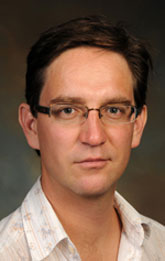
With the recent publication of "AI‐Driven Identification of Exceptionally Efficacious Polypharmacological Compounds That Extend the Lifespan of Caenorhabditis elegans" in Aging Cell, many new outlets are talking about future of using machine learning to determine compounds that extends lifespan in C. elegans
Wednesday, November 12, 2025
Thursday, December 3, 2015
Transcription Drift Paper Garners Media Attention
With the recent publication of "Suppression of transcriptional drift extends C. elegans lifespan by postponing the onset of mortality" in eLife, excitement and interest has been rapidly spreading and the lab has been interviewed by numerous media sources to highlight the story. Some of the main articles can be found below:
TSRI News Release The Guardian Science Daily Medical Xpress Science Newsline |
Monday, September 15, 2014
Research Spotlight on Michael in SCRIPPS EDUCATION REPORTER: EDITION 1
We all want to live longer. Dozens of laboratories at The Scripps Research Institute are working to defeat life-threatening conditions ranging from different types of cancer to genetic and neurodegenerative disorders. But independent of specific diseases, what factors determine a person’s lifespan? Might it be possible one day to significantly extend length and quality of life? It turns out the answers to these big questions may be found in the smallest of places
TSRI faculty members William Ja and Michael Petrascheck study the aging process using two types of animals known in biomedical research as “model organisms.” Drosophila melanogaster, aka the common fruit fly, is used in the Ja lab, while the Petrascheck lab relies on Caenorhabditis elegans (C. elegans), a tiny nematode or roundworm. Both organisms are easy to work with in a laboratory setting and bear genetic similarities with mammals, including humans. These similarities are due to specific genes and their functions being “conserved” in both species, or relatively unchanged over time by evolution.
Tuesday, July 1, 2014
Sunitha Featured on Postdoc Corner
Sunitha Rangaraju is a Research Associate with a Muscular Dystrophy Association Development Grant Fellowship in the lab of Dr. Michael Petrascheck. She was elected and currently serves as the Career Development Co-Chair of the Society of Fellows, at TSRI La Jolla
campus.
What is your background?
I obtained my Ph.D in Biomedical Sciences from University of Florida, Gainesville (Hello, TSRI peers in Florida!). During my Ph.D, I identified protein quality control pathways of therapeutic potential in neurodegenerative disease models. I also determined key pathways that deteriorate with age and worsen disease condition and identified drug candidates to ameliorate the disease phenotypes and biomarkers.
[continue reading...]
campus.
What is your background?
I obtained my Ph.D in Biomedical Sciences from University of Florida, Gainesville (Hello, TSRI peers in Florida!). During my Ph.D, I identified protein quality control pathways of therapeutic potential in neurodegenerative disease models. I also determined key pathways that deteriorate with age and worsen disease condition and identified drug candidates to ameliorate the disease phenotypes and biomarkers.
[continue reading...]
Friday, May 30, 2014
Michael's Aging Cell Paper Highlighted in Science Magazine and Global Medical Discovery
Tracking Down a Tonic for a Long Life (ScienceMagazine)
Scientists may not yet have found the fountain of youth, but Ye et al. now report on a screen for drugs that can extend life span in the worm Caenorhabditis elegans.Starting with a collection of over 1200 drugs that have or are suspected to have activity in human cells, they identified nearly 60 compounds that extended life span up to 43%.
Many of the compounds targeted proteins that function in signaling pathways between cells, such as hormone or neurotransmitter receptors, particularly those for adrenaline and noradrenaline, serotonin, dopamine, histamine, and serotonin.
[continue reading...]
A pharmacological network for lifespan extension in Caenorhabditis elegans (Global Medical Discovery)
[continue reading...]
Monday, November 11, 2013
Greg Helps Start Scripps Consulting Club
Business skills and knowledge are rarely covered in science PhD coursework. A new organization at The Scripps Research Institute (TSRI) aims to provide such training and resources for postdoctoral fellows, graduate students and others considering a career in management consulting, venture capitalism, business development or strategic management. Response to its initial events indicates the Scripps Consulting Club (SCC) has found a ready audience.
“Some 50 people came to the California launch meeting and more than 25 showed up at the Florida meeting,” said SCC President Joseph Lai, a fourth-year graduate student in the Gottesfeld lab. “Clearly, there appears to be a demand for exposure to the business world and career options.”
[continue reading...]
Monday, April 8, 2013
Greg Receives NSF GRFP Fellowship
Daniel Murin of the Ward and Ollmann-Saphire labs, Ruben Martinez of the Baran lab, and Greg Solis of the Petrascheck/Kelly labs at The Scripps Research Institute (TSRI) have received National Science Foundation (NSF) Graduate Research Fellowships.
The highly competitive fellowships—13,000 submitted applications for 2,000 awards in 2013—recognize and support outstanding graduate students in NSF-supported disciplines who are pursuing research-based master's and doctoral degrees at accredited U.S. institutions. Fellows receive three years of support as well as international research and professional development opportunities.
[continue reading...]
The highly competitive fellowships—13,000 submitted applications for 2,000 awards in 2013—recognize and support outstanding graduate students in NSF-supported disciplines who are pursuing research-based master's and doctoral degrees at accredited U.S. institutions. Fellows receive three years of support as well as international research and professional development opportunities.
[continue reading...]
Monday, March 18, 2013
Sunitha Awarded Muscular Dystrophy Association Grant
The biggest known risk factor for ALS is advancing age, suggesting that the processes that contribute to aging also may contribute to ALS. This led Rangaraju and colleagues to hypothesize that compounds that slow the aging process might be valuable as drugs against ALS. To that end, their lab screened more than 89,000 molecules for those that delay aging and extend life span in C. elegans, a small worm that is widely used to study aging.
[continue reading...]
Wednesday, August 1, 2012
Michael Receives Ellison Medical Foundation New Scholar Award in Aging
Fasting, willingly abstaining from food intake, has been used throughout history as therapy for various conditions. In science fasting is often referred to as dietary restriction and is defined as reduced food-intake without malnutrition. For nearly 100 years scientific experimentation in model organisms has not only shown the beneficial effects of fasting/dietary restriction on various conditions but also that it extends lifespan.
The problem with developing medical treatments based on fasting lies in the word “willingly.” To put it simply: We do not want to fast. In fact we, and probably every other organism on this planet, do about everything in its power to avoid fasting. Everyone that has tried to abstain from eating for just 24 hours knows how much willpower it takes.
[continue reading...]
The problem with developing medical treatments based on fasting lies in the word “willingly.” To put it simply: We do not want to fast. In fact we, and probably every other organism on this planet, do about everything in its power to avoid fasting. Everyone that has tried to abstain from eating for just 24 hours knows how much willpower it takes.
[continue reading...]
Monday, September 26, 2011
Michael is awarded NIH Director's New Innovator Award
The awards, which were announced by NIH Director Francis S. Collins at the Seventh Annual NIH Director's Pioneer Award Symposium September 20, will provide each recipient with $1.5 million in research funding over five years.
[continue reading...]
Subscribe to:
Posts (Atom)